Moving Software Onboarding That Gets Your Team Live
MoveEmpire helps moving-company owners replace scattered tools with one connected operating system for leads, estimates, scheduling, dispatch, communication, payments, automation, and reporting. Our implementation process is built around how real moving businesses work—not a generic software checklist.

Software Is Only Valuable When Your Team Can Use It
Buying moving-company software is not the finish line. The real result comes from translating your current operation into a cleaner workflow, configuring the system around your services and locations, preparing your team, and launching without losing sight of active leads or booked moves. MoveEmpire onboarding is designed to make that transition clear, controlled, and practical.
Your MoveEmpire Implementation Roadmap
Every company has a different mix of services, users, markets, lead sources, sales habits, and dispatch rules. The roadmap below gives the launch structure while leaving room to configure the platform around the way your company actually operates.
Discovery and success map
We begin with the outcomes that matter: faster lead response, cleaner estimates, fewer scheduling conflicts, clearer crew assignments, better follow-up, stronger visibility, or a consistent multi-location process. We document the current flow from first inquiry through final payment and identify where information becomes delayed, duplicated, or lost.
Account and company setup
Your workspace is organized around the company structure, authorized users, service coverage, locations, roles, and operating preferences. The goal is a platform that feels like your business from the first login, with the right people seeing the right information.
Lead pipeline configuration
We organize stages for new inquiries, qualification, estimating, follow-up, booking, lost opportunities, and reactivation. A clear pipeline helps owners understand the health of sales while helping representatives know exactly which opportunity needs attention next.
Estimate workflow
Estimate processes are aligned with the company’s sales approach. Teams can keep customer details, inventory notes, move information, pricing context, communication, and status together. Learn more on our moving estimate software page.
Scheduling and dispatch
Jobs, dates, crews, vehicles, and operational notes need a single source of truth. We help create a dispatch-ready process so office teams can see what is booked, what needs confirmation, and which resources are assigned. Explore moving dispatch software.
Automation and launch
After the core workflow is stable, relevant automations and reminders can reduce repetitive work. The launch includes practical team readiness, final checks, and a clear go-live approach. Automation supports the team; it does not replace responsible human review or customer care.
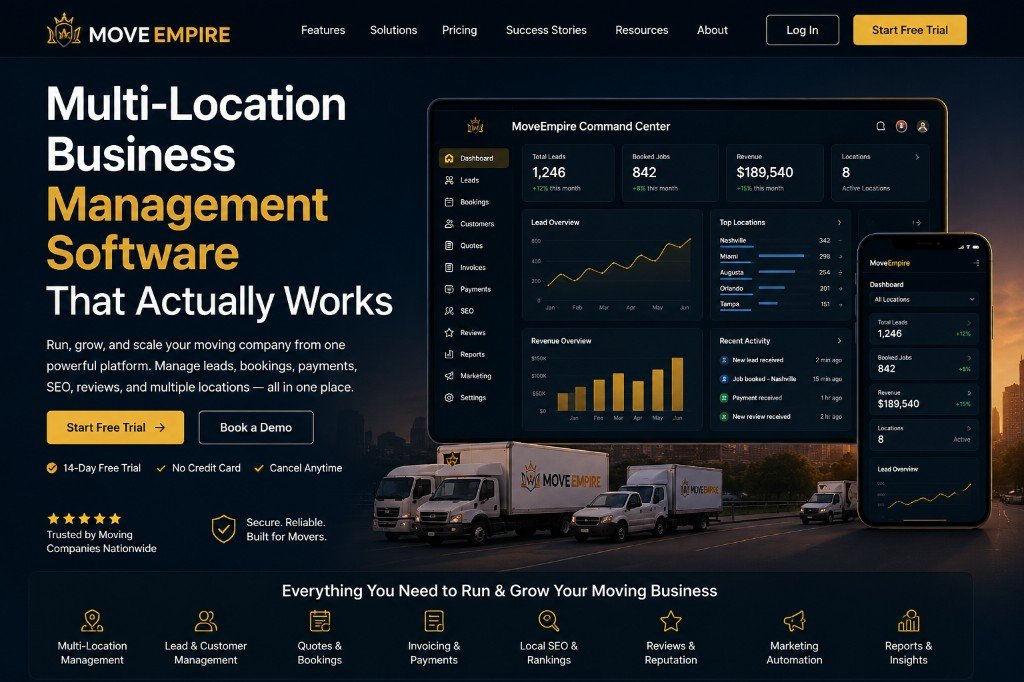
What We Configure With Your Team
Implementation focuses on the operational areas that create the most value for your company. The exact configuration depends on your subscription, available platform features, existing data, and business requirements.
- Lead capture, ownership, pipeline stages, and follow-up visibility
- Customer records, move details, notes, communication history, and documents
- Estimate preparation and sales workflow organization
- Booking, scheduling, crew assignment, job status, and dispatch readiness
- Role-based access for owners, managers, sales staff, office teams, and field users
- Performance visibility for leads, booked work, job activity, and team follow-through
- Multi-location structure for operators managing more than one market
- Automations and notifications appropriate to the company’s processes
Moving CRM Data Without Moving the Mess
Many companies arrive with customer information spread across spreadsheets, inboxes, calendars, contact lists, older CRMs, estimating platforms, or disconnected software. Migration should not mean copying every outdated record and inconsistent field into a new system. It should create a dependable operating foundation.
Before importing information, determine what data is current, which records have business value, and how fields should map into MoveEmpire. Duplicate contacts, incomplete entries, inconsistent dates, and outdated pipeline stages may need cleanup. The customer remains responsible for confirming that it has the right to use and transfer its data, and for reviewing imported information.
A practical migration may be completed in phases. Active prospects and upcoming jobs can be prioritized first, followed by recent customers and approved historical records. This reduces disruption while giving the team faster access to the information needed for daily operations. Complex migrations may require additional scoping, preparation, or services depending on volume and format.
Migration readiness checklist
- Identify the systems and files that contain current business data.
- Choose the records that truly need to be retained.
- Standardize names, phone numbers, dates, stages, and location fields.
- Remove or resolve obvious duplicates before importing.
- Map source fields to the correct MoveEmpire destinations.
- Create a secure backup of the original source.
- Test a limited sample before processing a larger dataset.
- Validate record counts, required fields, and representative customer records.
Training That Matches Each Person’s Job
Owners need visibility. Sales teams need a clear next action. Dispatchers need reliable scheduling information. Crew leaders need access to the job details relevant to the field. Effective onboarding does not overwhelm every employee with every feature; it teaches each role how to complete the work that belongs to them.
Owners and executives
Learn how the platform connects sales and operations, how to review performance, how to spot stalled opportunities, and how to create accountability without chasing updates across multiple systems.
Sales and estimating teams
Learn the expected steps for responding to a lead, maintaining customer data, preparing the opportunity for an estimate, documenting follow-up, and moving a customer toward a clear booking decision.
Dispatch and operations
Learn how information should move from booked work into the operating schedule, where assignments and status updates belong, and how to keep office and field teams aligned.
Implementation Pricing Without Guesswork
MoveEmpire subscription options and current plan information are available on the MoveEmpire pricing page. The right plan depends on the capabilities, number of users, operating complexity, and level of support your business needs.
Standard onboarding assistance may be included or defined by the selected plan. Advanced configuration, extensive data cleanup, custom migration work, large user groups, multi-location rollout planning, or specialized requirements may require a separate scope. When additional work is needed, it should be identified before the work begins so you understand the deliverables and applicable cost.
We do not publish invented fees on this page. Review the current pricing page or request a direct conversation for an accurate recommendation based on your organization.
Owner-Operated Trust Built Into the Product
MoveEmpire is built with the perspective of an owner-operated business. That matters because a moving company does not run on software screens alone. It runs on speed, responsibility, communication, customer confidence, careful coordination, and the ability to make a decision while the day is already moving.
Our goal is to help operators create an accountable system: every lead has a status, every estimate has a next step, every booked move has operational details, every team member understands their role, and ownership can see what is happening. Technology should make the company easier to manage and the customer experience easier to trust.
MoveEmpire does not claim that installing software automatically produces revenue, rankings, or business success. The platform supports execution. Results depend on the company’s market, services, pricing, team, adoption, processes, customer experience, and consistent use of the system.

Available Across the United States and Globally
MoveEmpire’s primary home base is Nashville, Tennessee. The software is designed for moving-company operators across all 50 U.S. states and for businesses outside the United States that can use the platform within their local operational, legal, payment, tax, privacy, and communication requirements.
Global availability does not mean that MoveEmpire maintains a physical office in every state or country. It means qualified operators can access a cloud-based system beyond Nashville. Companies are responsible for confirming how their local laws, customer contracts, taxes, data obligations, messaging rules, payments, and industry requirements apply to their use of software.
Multi-location operators can create more consistent processes across markets while preserving visibility into local activity. See how the platform supports expanding organizations on our multi-location moving company software page.
What “Ready to Go Live” Should Mean
A clean launch is not simply an account with users added. It means the critical workflows have been reviewed, sample records have been tested, responsibilities are understood, and active business can move through the system without avoidable confusion.
Workflow verification
Create a test lead and move it through the approved stages. Confirm that essential customer and job information stays visible. Review the estimate-to-booking handoff and ensure dispatch can locate what it needs.
Team verification
Confirm that every user can sign in, has the intended permission level, understands where to record activity, and knows who to contact when a process question appears.
Business continuity
Choose a go-live date that protects active work. Keep an approved backup of important source data, document any temporary parallel process, and define when the previous system will stop receiving new information.
After launch, adoption should be reviewed through real operating behavior. Are new leads receiving owners and next steps? Are notes being entered consistently? Are bookings reaching dispatch with enough detail? Are managers using the same reports? Early corrections prevent small shortcuts from turning into a fragmented system.
A 30-Day Operating Plan After Launch
The first month turns configuration into habit. A simple operating rhythm helps the team adopt MoveEmpire while giving leadership evidence about what is working and what needs adjustment.
Week one: stabilize
Review new leads daily and confirm that every inquiry has an owner, stage, next action, and accurate contact information. Check upcoming jobs for missing operational details. Resolve access or process questions quickly so employees do not return to side spreadsheets or private notes. Keep changes limited to issues that materially affect daily work.
Weeks two and three: improve
Look for repeated friction. If representatives skip a field, decide whether training is needed or the field is unnecessary. If dispatch repeatedly asks sales for the same detail, add that information to the handoff standard. Review follow-up consistency and confirm that automation supports, rather than confuses, customer communication.
Week four: measure
Compare the launch goals with real usage. Review pipeline visibility, response discipline, estimate follow-up, booked-job completeness, scheduling clarity, and management reporting. Document the final standard operating process, assign an internal platform owner, and schedule a recurring workflow review.
Data, Permissions, and Customer Trust
Moving companies handle sensitive customer and job information. Onboarding should apply a least-access approach: each user receives only the permissions needed for that role. Departed employees should be removed promptly, shared accounts should be avoided where practical, and account owners should periodically review active users.
Imported information should come from authorized sources. Teams should confirm customer details before relying on old records and should follow applicable privacy, communication, payment, tax, record-retention, and consumer-protection rules. International users may face requirements that differ from U.S. businesses. MoveEmpire supports business organization but does not replace legal, tax, privacy, or compliance advice.
Customer trust also depends on data quality. Names, dates, addresses, inventory notes, access conditions, pricing context, promises, and changes should be recorded in the appropriate place. A complete record reduces misunderstandings and helps the next employee serve the customer without forcing them to repeat the entire story.
Connect Tools With a Clear Purpose
An integration should solve a defined operating need. Before connecting forms, advertising sources, email, calendars, payments, or other services, identify what information should enter MoveEmpire, which system is the source of truth, who owns failures, and how the team will detect duplicate or incomplete records.
Start with the connections that protect revenue and customer experience. Lead capture and essential communication usually matter more than adding every optional tool on day one. Test each connection with sample information, confirm field mapping and notifications, and document the fallback process. Feature and integration availability depends on the current MoveEmpire offering, third-party services, subscription level, and approved configuration.
Keeping the technology stack intentional makes support easier. Fewer disconnected tools mean fewer passwords, duplicate records, conflicting updates, and places where an important customer detail can disappear.
MoveEmpire Onboarding FAQs
1. What is moving software onboarding?
Moving software onboarding is the structured process of configuring the platform, organizing company workflows, preparing or migrating approved data, establishing user roles, training the team, testing critical processes, and launching the system. Good onboarding connects software features to the real steps a moving company uses to manage leads, estimates, bookings, crews, jobs, communication, and reporting.
2. How long does MoveEmpire implementation take?
The timeline depends on the company’s size, number of users and locations, data condition, workflow complexity, team availability, and required configuration. A straightforward new account can move faster than a multi-location organization migrating years of inconsistent records. The timeline should be established after the requirements and data are reviewed.
3. Can MoveEmpire import data from another CRM or spreadsheet?
Data migration options depend on the source format, quality, volume, available platform capabilities, and agreed scope. Information may need to be cleaned and mapped before import. Customers should maintain a source backup and review test results before relying on a larger migration.
4. Is onboarding included in the subscription price?
Included support and onboarding may vary by current plan. Extensive cleanup, custom migration, specialized configuration, multi-location rollout assistance, or other advanced services may require additional scoping. Check the current pricing page and request a recommendation for an accurate answer.
5. Does MoveEmpire train salespeople, dispatchers, and owners?
Onboarding should be role-based so each team member learns the work relevant to their responsibilities. Owners focus on visibility and accountability, sales representatives focus on lead and estimate workflow, and dispatch or operations teams focus on scheduling, assignments, job details, and status management.
6. Can a multi-location moving company use one implementation plan?
Yes, a shared framework can create consistent stages, required information, roles, and reporting across locations. However, local markets may have different teams, services, schedules, rules, or workflow needs. A phased rollout can reduce risk and make it easier to improve the standard before expanding.
7. Is MoveEmpire available outside Nashville?
Yes. Nashville, Tennessee is the primary home base, while the cloud software is intended for moving-company operators throughout the United States and internationally, subject to availability and the company’s responsibility to comply with applicable local requirements.
8. Will MoveEmpire onboarding interrupt current booked jobs?
A careful implementation is designed to minimize disruption, but every migration carries operational considerations. Prioritize active leads and upcoming jobs, choose a responsible launch date, preserve backups, test the essential workflow, and clearly tell the team when new information must begin in MoveEmpire.
9. What should our company prepare before onboarding?
Prepare a list of users and roles, service locations, lead sources, current pipeline stages, active jobs, estimating and dispatch workflow, desired outcomes, and the systems that hold customer data. Clean, organized source data and an available internal decision-maker make implementation more efficient.
10. What happens after MoveEmpire goes live?
The team begins operating in the approved workflow, managers review adoption and data quality, and the company corrects gaps early. Continued success depends on consistent use, clear ownership, reliable data entry, appropriate training for new employees, and periodic review as the business changes.
Build a Cleaner System for Your Next Stage of Growth
If leads, estimates, schedules, customer communication, job information, and reports live in separate places, your team spends too much energy searching and repeating work. MoveEmpire gives moving-company operators a path toward one connected operating system, supported by a practical onboarding process.
Software features, service availability, implementation scope, and pricing are subject to the current MoveEmpire offering and agreed terms.